
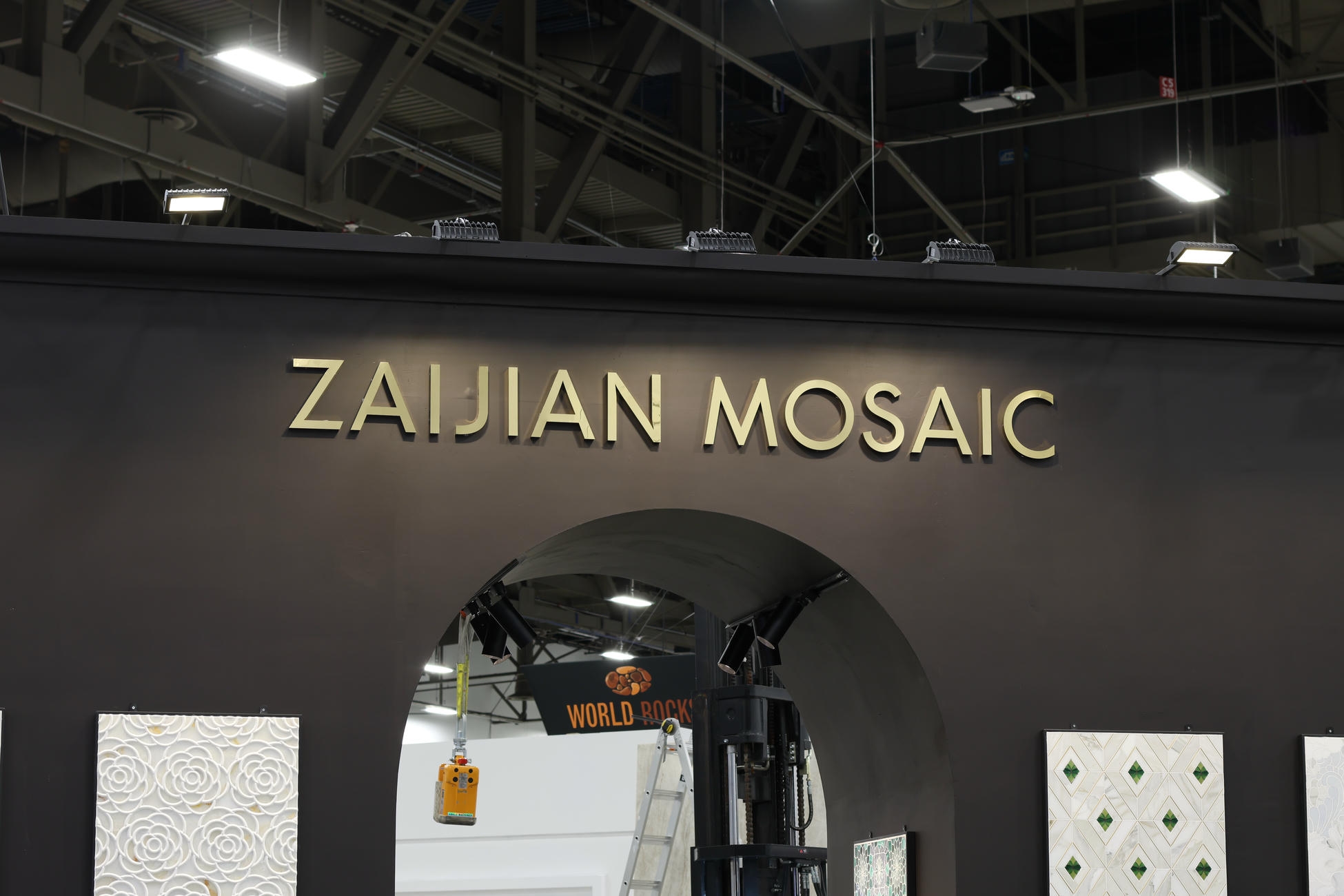
1. Build the booth around one focal point
The most common mistake on a show floor is trying to show everything. A wall of samples, a row of screens and five banners add up to noise, and visitors walk past.
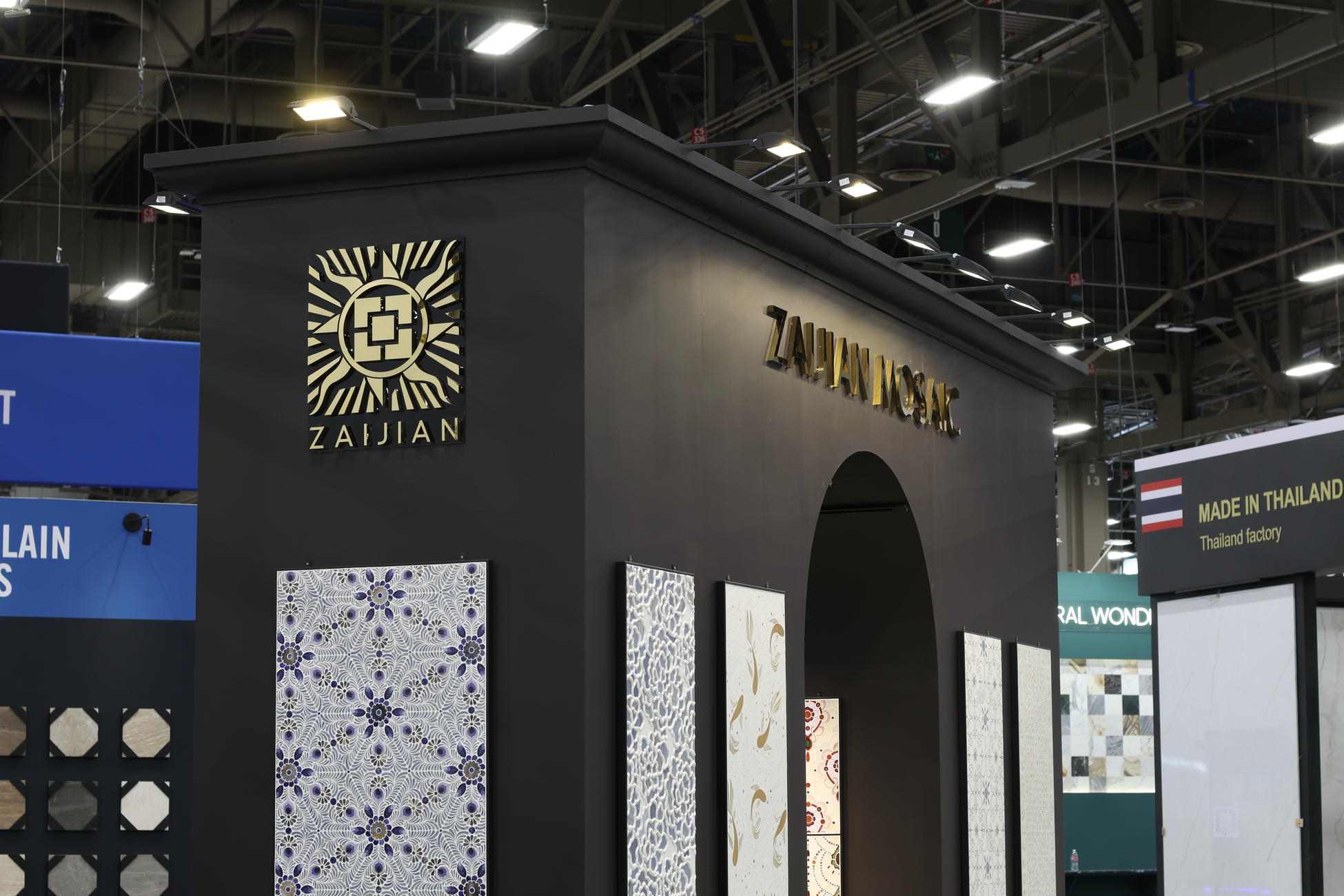
For ZAIJIAN we chose a single "super symbol": one oversized mosaic art wall at the heart of the booth. Everything else — the meeting area, the samples, the signage — was arranged around it. Pick the one thing you want visitors to remember and give it most of the space and light.
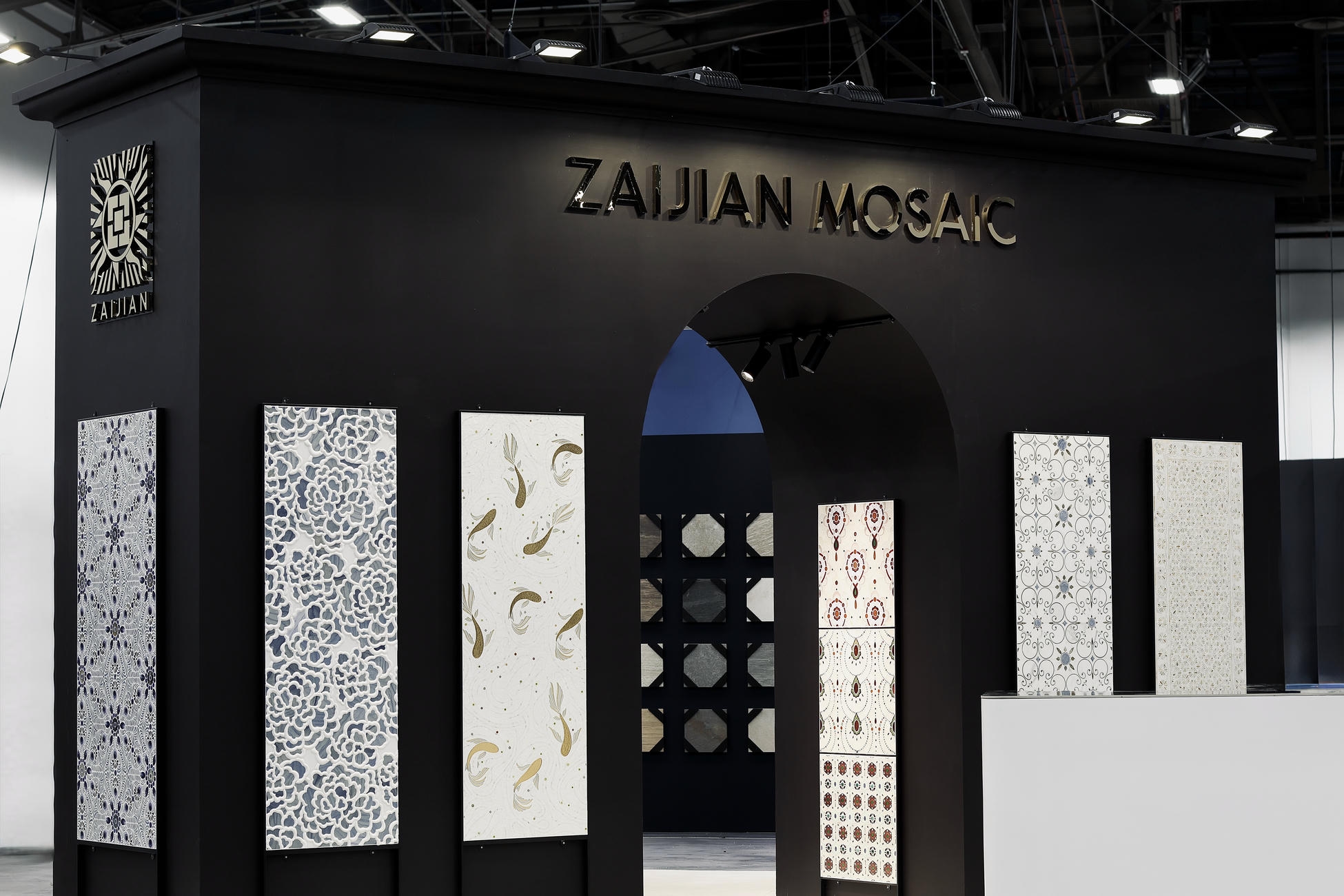
2. Design for the three-second aisle view
Visitors decide in seconds whether to step in. Stand in the aisle — on paper, in 3D and finally on site — and ask what someone sees in that moment: who you are, what you make, and why they should stop.
Keep the brand name high and large enough to read from a distance, keep the focal point visible from the main traffic direction, and leave the entry open rather than blocked by a counter.
3. Let visitors see the craft up close
A focal point pulls people in; detail keeps them there. Put the qualities buyers care about — texture, finish, precision — at arm's length, where they can be touched and photographed.
For a tile and stone show, that meant close-up mosaic work that showed the craftsmanship behind the big wall.
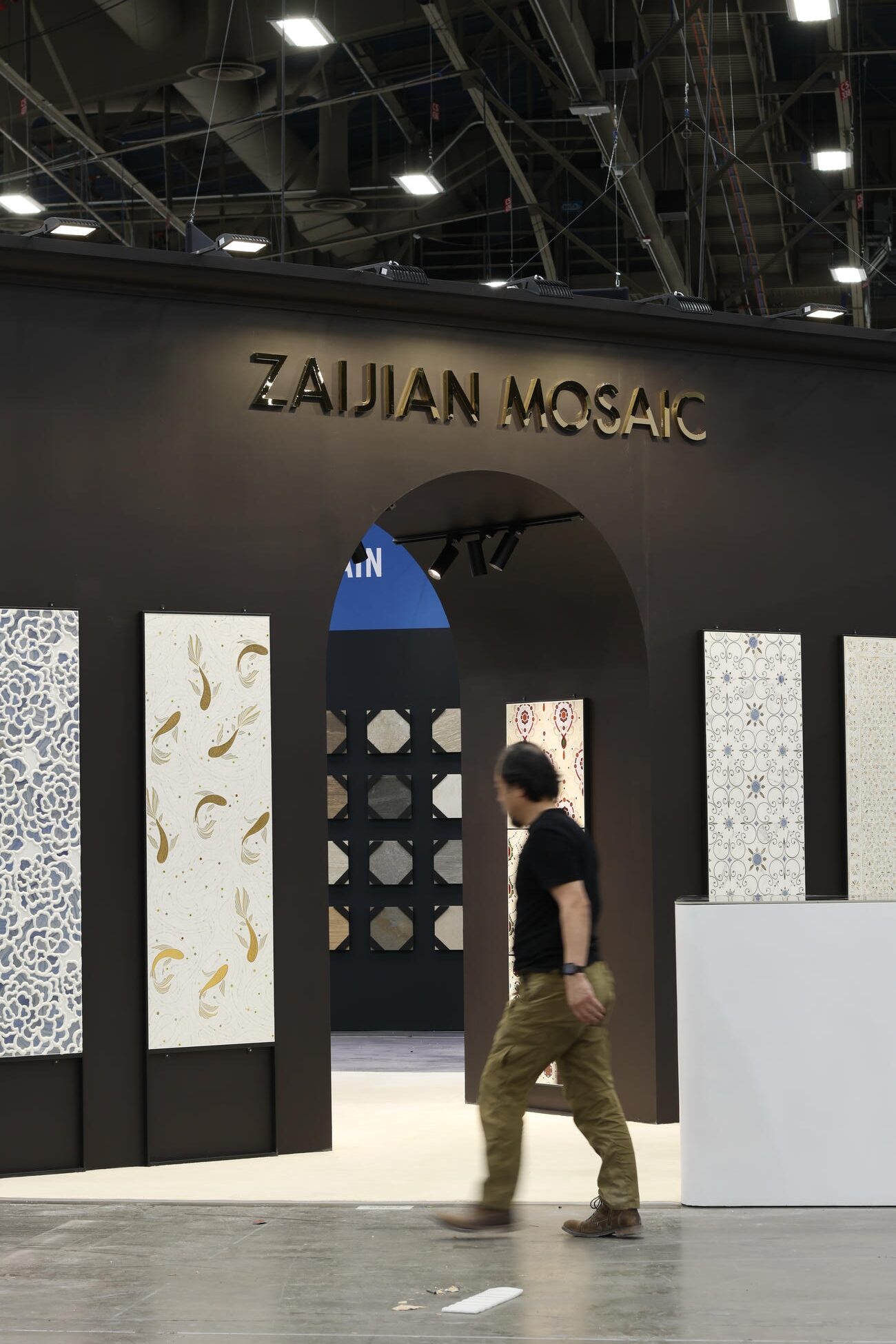
4. Test the lighting before you build
Convention halls have mixed, often harsh lighting, and materials can look completely different there than in a rendering. Mosaic in particular lives or dies by light.
Before production we built 1:1 sample sections and tested spotlight color temperature and angles until the wall looked right. If your product depends on color, gloss or texture, budget time for a physical lighting test.
5. Put the meeting space behind the statement
The goal of most B2B booths is qualified conversations, not crowds. Use the focal point to attract, then give serious buyers a quieter place to sit down just behind or beside it.
At ZAIJIAN, the meeting flow drew visitors past the feature wall into a calmer area where the team could talk with distributors.
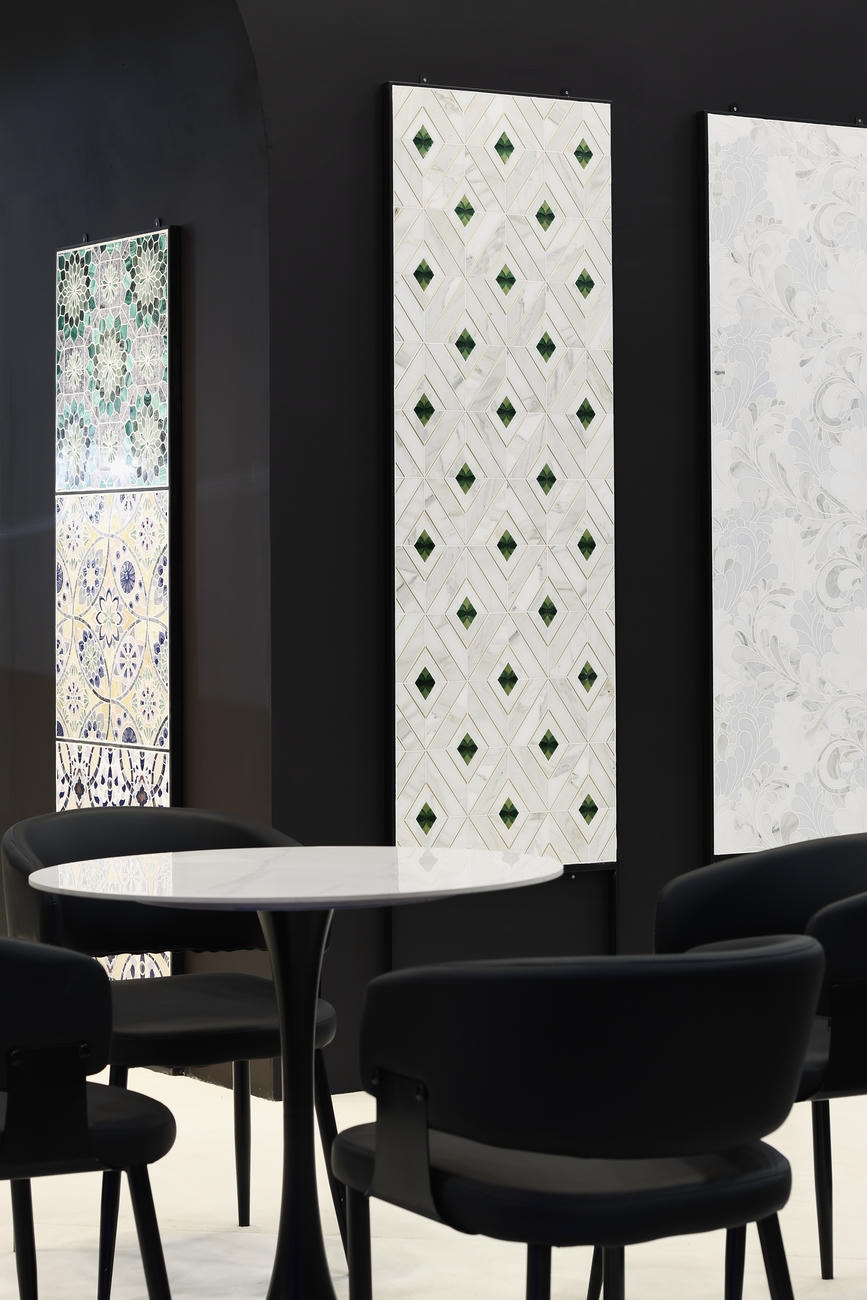
6. Edit the product display ruthlessly
Show fewer products, better. A few hero products, well lit and well explained, communicate quality more clearly than a full catalog on the wall.
Keep the full range in a printed or digital catalog for the meeting table.
7. Give people a reason to take a photo
At Coverings, many visitors stopped to take photos in front of the mosaic wall. Every photo is a reminder of your booth after the show, and often a post that reaches people who weren't there.
A strong focal point usually does this on its own. Make sure your brand name is in the frame when it happens.
8. Plan the flow for your actual stand type
An inline booth is seen from one side, a corner from two, a peninsula from three and an island from all four. The same design does not work for all of them.
Start the layout from where traffic comes from on the floor plan, and place the focal point, entry and meeting area to match.
9. Build in modules
Modular construction makes a custom booth easier to ship, assemble and reuse. We engineered the ZAIJIAN wall as modules, manufactured and crated them in China, shipped them by sea and assembled them in Las Vegas.
If you exhibit more than once a year, modules also let you reconfigure the booth for a different stand size.
10. Read the exhibitor manual first
Every show has its own rules for height, hanging signs, flooring, electrical and installation, plus order deadlines that come weeks before the show. Designing first and checking later is how booths get redesigned at the last minute.
Get the manual at the start and design within it.
11. Keep the booth consistent with your brand
Buyers will look you up after the show. If the booth, the website and the brochure look like three different companies, the impression you paid for fades quickly.
Use the same identity, typography and messaging across the booth, your website and sales materials. If the identity itself needs work, do it before the booth — see our brand identity service.
12. Plan backward from opening day
The ZAIJIAN booth took about 10 weeks from strategy to opening, including sea freight. Work backward from the show date: installation, shipping, production, sample tests, design approval, and the exhibitor deadlines in between.
Three to four months is a comfortable start for a custom booth; start earlier if it ships internationally.